Some destinations fight for attention with noise: more nightlife, more “must-do” lists, more selfies stacked like groceries. Mompox plays a different game. The value here isn’t speed—it’s staying, observing, and letting the place slow you down. From a product standpoint, Mompox doesn’t sell adrenaline; it sells atmosphere, living heritage, and high-density cultural experiences.
Santa Cruz de Mompox (also spelled Mompós) lies in the department of Bolívar, on the Magdalena River. Its historic center was inscribed as a UNESCO World Heritage Site in 1995. This is not a decorative badge: it explains why walking these streets feels like stepping into a stage where time decided to work remotely.
This is not a generic guide. It’s a niche-travel guide: for cultural travelers, photographers, lovers of religious rituals, fans of fine craftsmanship, birdwatchers, and anyone tired of copy-paste destinations. If you’re looking for “what to do in one day,” you’ll still find value—but the real ROI shows up when you give Mompox at least 2–3 nights, reserve now
Mompox on the map: why this place matters (and not just because it’s “colonial”)
Mompox is part of Colombia’s Heritage Towns Tourism Network (Red Turística de Pueblos Patrimonio) since 2010, reinforcing its positioning as a conservation-driven cultural destination. National tourism sources also highlight it as a colonial-heritage city with churches, architecture, and deep tradition along the Magdalena.
The interesting part is not only “old.” It’s intact: human scale, daily life still unfolding inside the historic center, sunsets over the Mompox river branch, slow conversations in rocking chairs, and the patient craft of local goldsmiths. In an industry flooded with instant experiences, Mompox offers something scarce: authenticity without performance.
Niche segments that fit Mompox best
- Heritage travel (UNESCO + religious architecture): churches, plazas, colonial homes, local museums.
- Religious & ceremonial travel: Holy Week as both spiritual and cultural experience.
- Premium artisan travel: momposina filigree (high-detail jewelry).
- Slow river travel: gentle navigation, sunsets, Magdalena storytelling.
- Low-intensity nature: wetlands, birds, reptiles, wildlife photography.
- Cultural events: jazz festival and seasonal programming.
Executive translation: Mompox is not for “checking boxes.” It’s for living the destination.
The first big experience: walk the historic center like a curator, not a tourist
To understand Mompox, don’t start with a rushed tour. Start with the town’s rhythm: plazas, temples, arcades, shade, river breeze. The ideal walk has three acts:
Act 1: La Albarrada and the river “front”
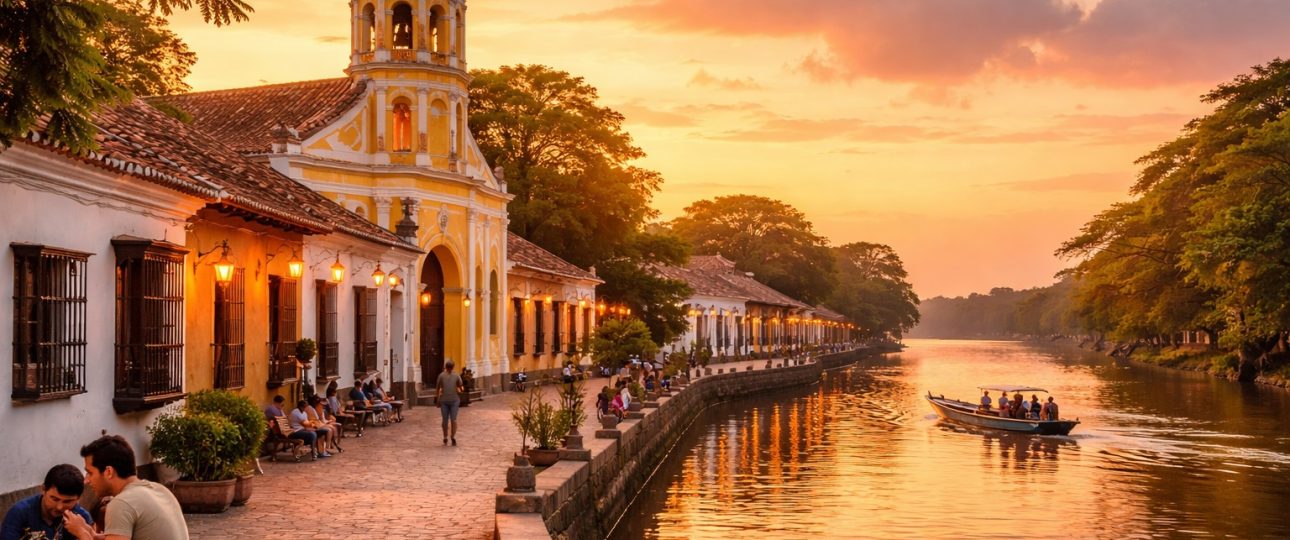
La Albarrada (the riverside promenade) is the emotional showcase: low houses, trees, benches, the river breathing at its own pace. This is where you understand why Mompox feels different: it doesn’t look inward—it looks at the Magdalena.
Niche tip (photography): come early (soft light) and return at sunset (backlight and reflections). If your camera has “patience mode,” this is where it shines.
Act 2: churches and plazas (living heritage, not a postcard)
Mompox works like a curated collection; each church adds another layer of history. One of the most iconic is Santa Bárbara Church, widely highlighted for its architectural value. You don’t need to be an architecture expert—just learn to look: proportions, materials, silence, and that unique mix where the sacred lives alongside the everyday.
Act 3: market vibes, conversations, local life
What stays with you isn’t always a building. It’s a conversation with an artisan, a guide narrating river stories, a family easing into the afternoon, a musician rehearsing. The premium experience here is human connection—respectful, never intrusive.
Holy Week in Mompox: when the destination becomes ritual
If Mompox has a flagship product in cultural and religious tourism, it’s Holy Week. During these days the town turns ceremonial: processions, sacred music, contemplation, and a cinematic aesthetic that is not staged—it’s real.
How to experience Holy Week without ruining it (for you or locals)
- Book early: capacity is limited and demand spikes hard.
- Dress and behave appropriately: this isn’t a theme park; it’s a living tradition.
- Photograph with judgment: don’t invade, don’t use flash where it doesn’t belong.
- Heat strategy: hydration, breaks, shade, slower pace (Mompox doesn’t reward sprinting).
Worth it if you’re not religious? Yes—if you care about culture and ritual. Just arrive with the right mindset: respectful observer, not impatient consumer.
Momposina filigree: real luxury is craftsmanship (and Mompox owns it)
For artisan-focused travel, Mompox is world-class because of one thing: filigree jewelry. Filigree here is not “a pretty souvenir.” It’s micro-engineering by hand: ultra-thin metal threads, precision, patience, and a heritage aesthetic that feels both classic and modern.
Recommended experiences around filigree
- Workshop visit (when artisans allow it): seeing the process rewires your sense of value.
- Buy consciously: ask about materials, time invested, and how to care for the piece.
- Choose meaning over size: the best souvenir isn’t the biggest—it’s the most personal.
Business logic: buying at origin supports a local value chain that keeps tradition, employment, and skills transfer alive.
River travel: the Magdalena as an experience (not a background)
You can’t understand Mompox without the river. The Magdalena is not scenery—it’s narrative. That narrative is gaining relevance again with renewed river tourism initiatives that include stops in Mompox.
If your niche is slow luxury, this angle is powerful: traveling by river, visiting communities, and understanding Colombia through its historic artery. Done well, river tourism is high-value. Done poorly, it pressures prices and local life. Your best play: choose operators and experiences that integrate local communities, not just “consume the destination.”
Simple, high-impact plan in Mompox: a sunset boat ride. You don’t need more to understand why people leave talking about the river like it’s a person.
Ciénaga de Pijiño: calm nature for birdwatchers, photographers, and curious travelers
If your niche is low-intensity nature (no hardcore trekking), Ciénaga de Pijiño is a classic excursion: small boats, birdwatching, and chances to spot reptiles and wetland life.
How to maximize the experience
- Golden hour: late afternoon for sunset; early morning for bird activity.
- Gear: a mid-range zoom helps, but patience beats hardware.
- Essentials: repellent + sun protection (style melts without logistics).
- Go with a local guide: interpretive guiding beats silent transport.
Perfect for couples, solo travelers, mindful content creators, and families wanting nature without unnecessary risk.
Jazz Festival: when Mompox’s silence fills with swing
For cultural travelers, jazz is another entry point. Mompox hosts an established jazz festival (FestiJazz), with official announcements published by local government channels for specific dates.
Why it matters:
- It diversifies seasonality: not everything depends on Holy Week.
- It attracts a different traveler profile: more cultural, more respectful, more “stay longer.”
Strategy tip: if you go for the festival, bundle it: jazz + filigree + river + wetlands. That turns a 2-day trip into a 4-day story without friction.
How to get to Mompox: low friction, but not zero (and that’s part of the filter)
Mompox isn’t “two blocks away” from Colombia’s major tourist hubs, and that’s a competitive advantage: it filters out the rush crowd. Still, there are clear routes.
By road (the typical route)
Travelers often arrive overland via connections through regional nodes (routes vary by operator and season). In peak dates, buy tickets early and confirm schedules—small-destination logistics can change more than anyone wants.
By air (emerging option—verify before buying)
Mompox is served by San Bernardo Airport. Flight availability can fluctuate based on demand and operations, so always verify on official channels before booking.
By river (experience, not just transport)
If your objective is “travel with story,” the Magdalena corridor is the ultimate narrative route, increasingly featured in modern river tourism itineraries that include Mompox.
Climate & timing: Mompox is hot—your strategy is energy management
Mompox can be intensely warm depending on the month. Practical day structure:
- Morning: long walks, photography, churches.
- Midday: rest, hydration, long lunch (as it should be).
- Afternoon: river, Albarrada, sunset.
- Night: historic center with cooler breeze and warm lighting.
If you arrive from a cold city thinking you’re invincible, Mompox will re-train you within 48 hours—politely, but firmly.
Niche itineraries (so your trip has narrative, not just activities)
3-day itinerary: heritage + river + craftsmanship (Mompox core)
Day 1 — Cultural landing
- Check-in and orientation walk.
- Albarrada + plazas + Santa Bárbara.
- Early dinner + rest.
Day 2 — Craftsmanship and curation
- Filigree workshops (visit + conscious shopping).
- Local museums/cultural houses (depending on schedule).
- Sunset on the river.
Day 3 — Calm nature
- Ciénaga de Pijiño (birds/reptiles/photography).
- Final walk + last purchases.
5-day itinerary: real slow travel (the “fall in love” plan)
Days 1–2: deep historic center (details, stories, conversations).
Day 3: wetland nature + long rest.
Day 4: a themed route (religious, artisan, or photo-focused).
Day 5: one extra sunrise/sunset + departure.
Day 4 is where you lock your niche and convert the trip into a personal story.
Mompox for content creators: aesthetics with substance (no circus)
If you create content, Mompox offers three high-leverage assets:
- Light (golden, soft, naturally cinematic).
- Texture (walls, stones, wood, metal, shadow).
- Narrative (river, crafts, ritual, music).
Must-capture shots
- Albarrada at morning and sunset.
- Santa Bárbara (exterior + surroundings).
- Filigree workshop close-ups (hands at work).
- Processions (Holy Week only, respectfully).
- River at sunset (silence + reflections).
Mompox doesn’t need filters; it needs you not to chase fake virality.
Responsible travel: how to enjoy Mompox without pricing locals out
In small heritage towns, tourism can be blessing or pressure. Your role as a niche traveler:
- Buy local (real craft, local guides).
- Respect rituals (Holy Week isn’t a “show”).
- Don’t negotiate aggressively (bargaining isn’t humiliation).
- Protect heritage (damage takes decades to repair).
- Consume with intent: fewer things, better things.
Not moralism—just destination sustainability in operational terms.
Closing: you don’t “visit” Mompox—you inhabit it (even briefly)
Mompox is a masterclass in meaningful travel: it slows you down, rewards detail, and gives you something rare today—the feeling of being somewhere that doesn’t try to impress you. It simply is.
If you want calm, culture, beauty, and craftsmanship, Mompox is a strong bet. If you want to “do everything in 24 hours,” save the effort: Mompox doesn’t negotiate with hurry.